[ Editor’s note: Following is a piece that a wrote for a magazine, but after waiting over a year for them to publish it and pay me, I’m giving up and putting it here so that it can see the light of day and you can get some insight into a region that doesn’t see a lot of media play. Enjoy! ]
Northern Spain’s “Small California”
Why your next favorite Cab, Merlot, or Gewürztraminer might just be coming from Somontano
Take a second or two, and think about your favorite Cabernet Sauvignon or Merlot, your go-to Chardonnay, even your last Gewürztraminer.
What region was emblazoned on the labels of those tasty wine? Paso Robles? Washington? Chile?
Chances are very good that the word “Somontano” was not the area printed on the label. And yet, chances are also very good that this relatively small northern Spanish Denominación de Origen has been growing those same fine wine grapes longer than the more famous regions that produce your favorite versions of those same wines.

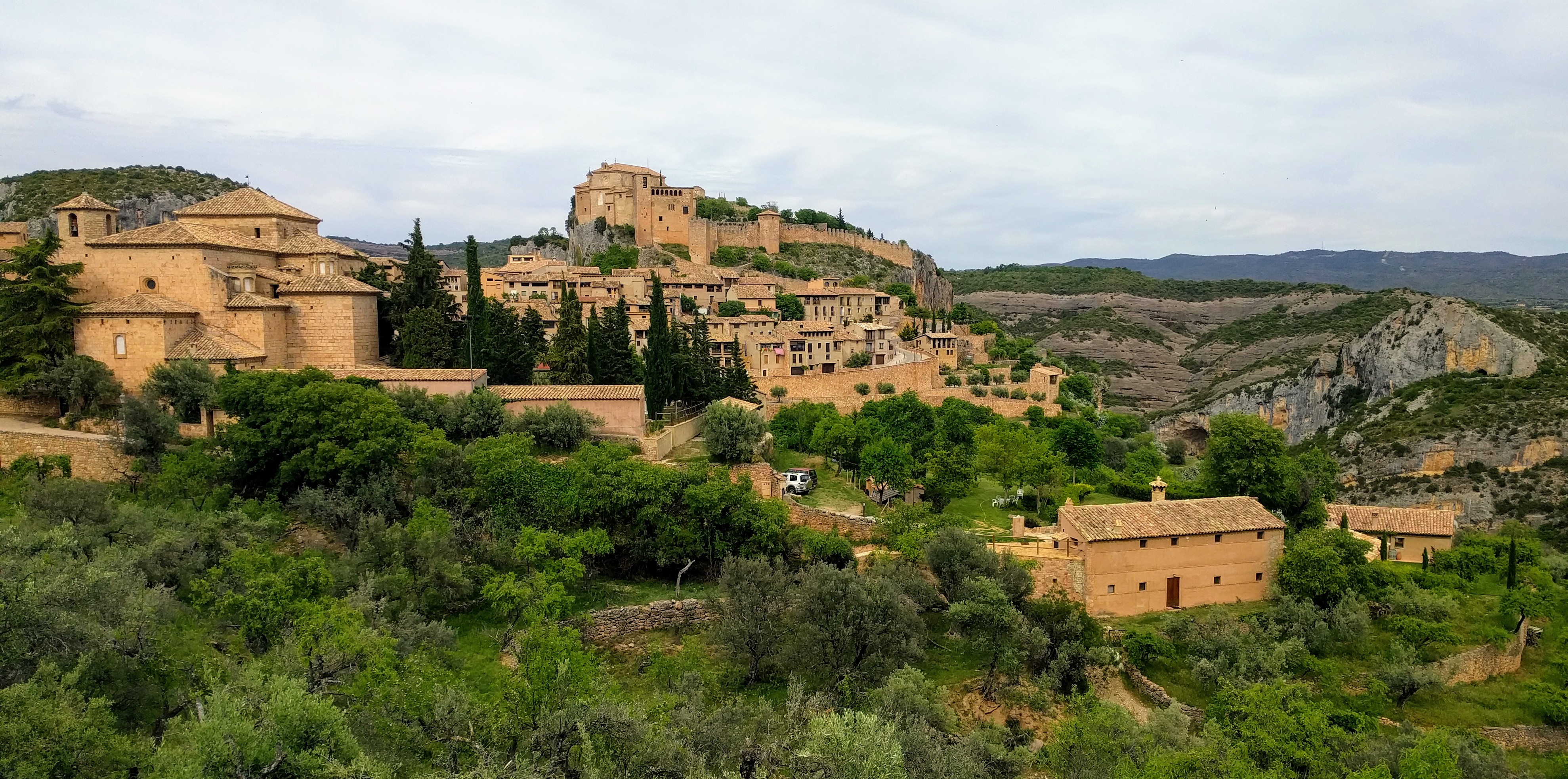
Somontano’s ancient Alquézar
Like most of the wine regions in Western Europe, viticulture in Somontano was probably established by the Romans, and also probable predates reliable written history, extending back to the second century BC. That it took the region until 1984 to become an officially recognized Denominación de Origen (DO) is, in a way, indicative of the minor identity crisis that defines the modern Somontano. At a time when “uniqueness” is the marketing battle cry of most luxury fine wine regions, Somontano is the odd man out.
Of the grapes officially permitted in the DO, only three (the white Alcañón, and reds Moristel and Parraleta) are indigenous. A few others (such as Garnacha and Tempranillo) are Spanish in origin but not native to Somontano. The rest are a hodgepodge of some of the wine world’s most famous – and decidedly not Spanish – grapes: Cabernet Sauvignon, Merlot, Syrah, Pinot noir, Chardonnay, and Gewürztraminer.
What makes Somontano such an awkwardly difficult topic in marketing meetings is the same thing that makes many of its wines so good: the place has a great climate growing famous international grape varieties. As winemaker Jesús Artajona Serrano, from Enate (one of the founders of the Somontano DO) puts it, “we are in a small California…”

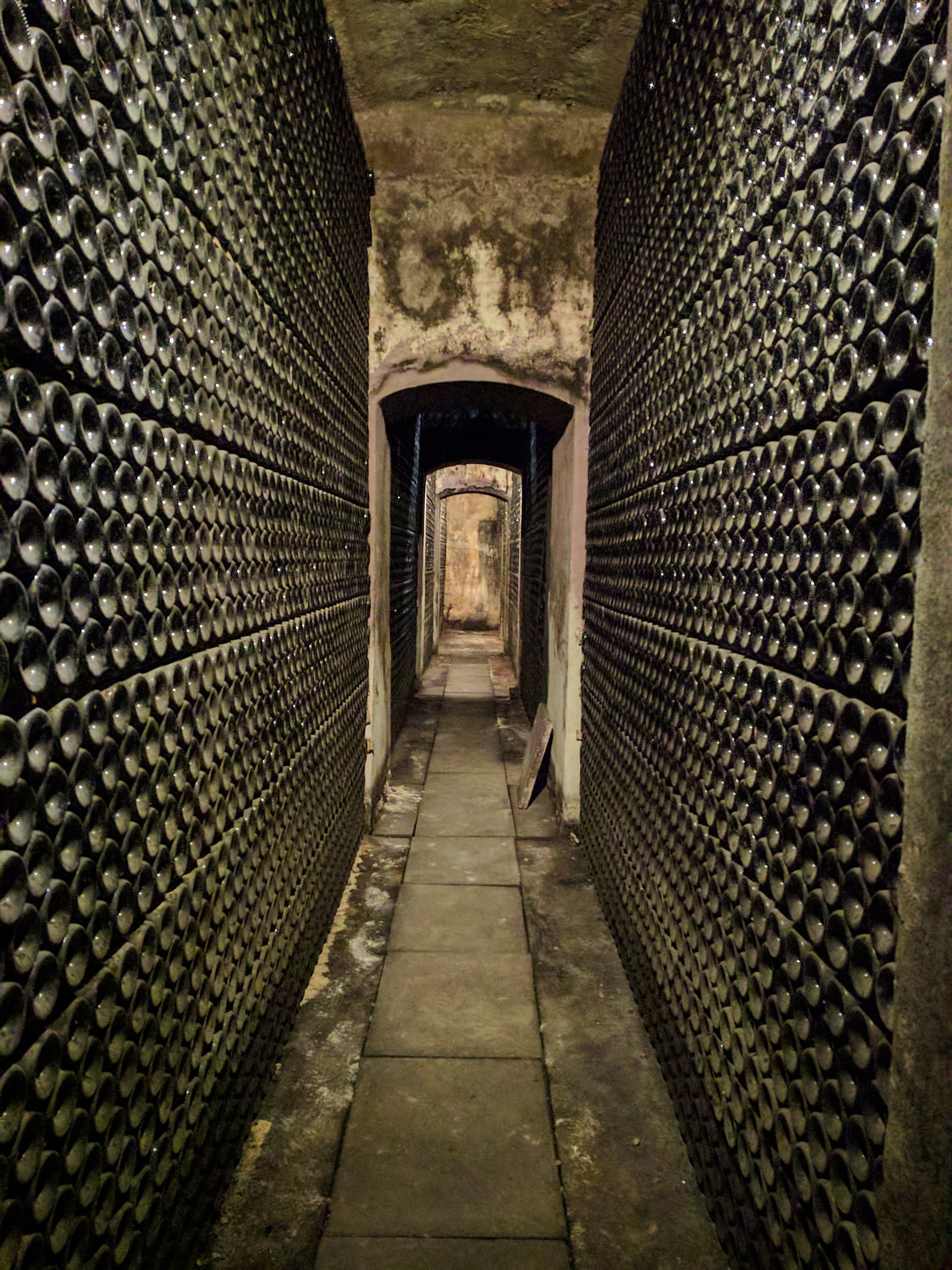
Cellars of Pirieneos
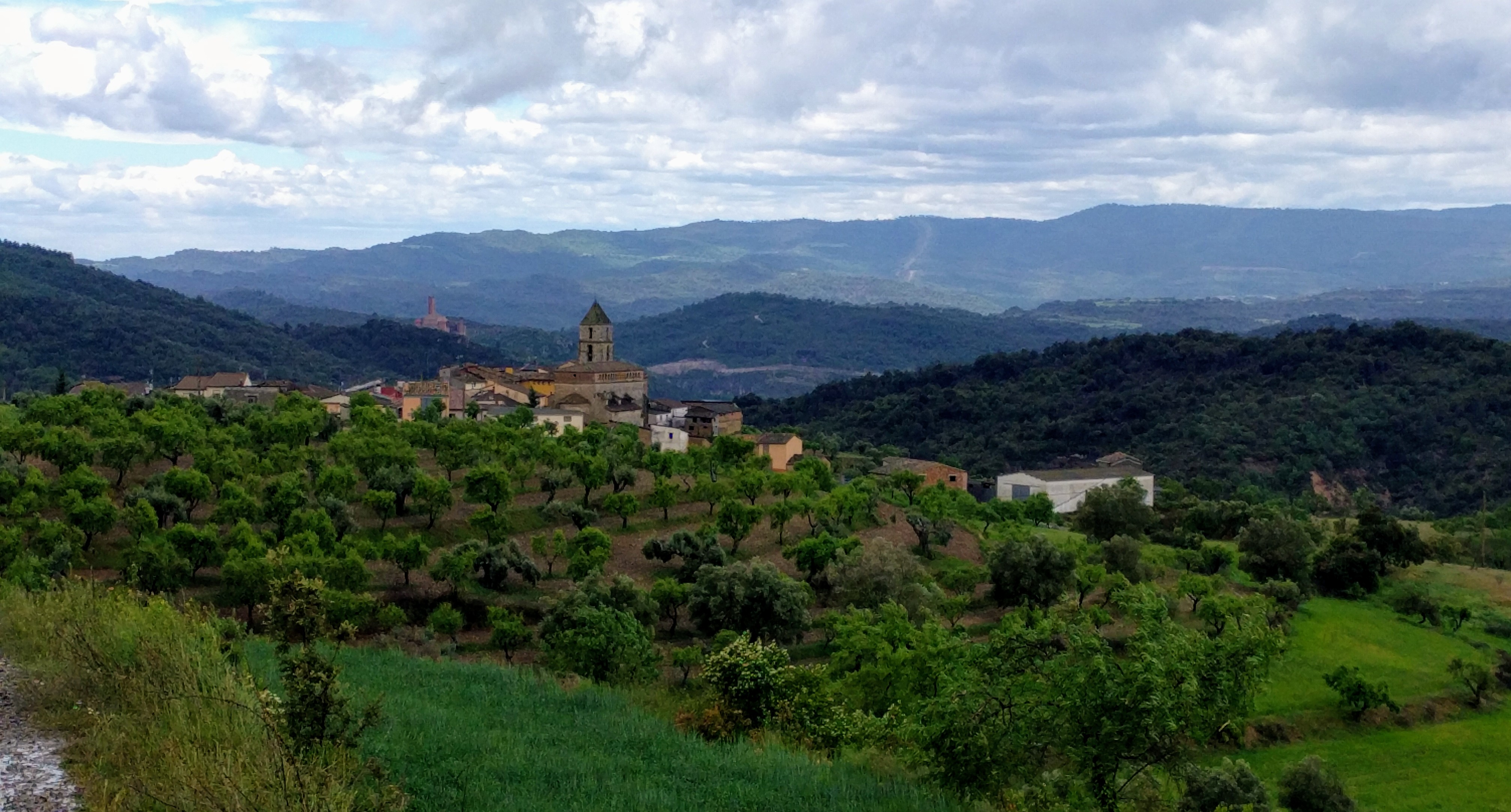
Roughly translated, Somontano means “foot of the mountains.” Protected by the Pyrenees, the area sits at the edge of the European plate, on soils that were part of an ancient ocean, topped with runoff from the nearby mountains. While the climate is mostly continental, the proximity to the mountains allows for large diurnal temperature shifts, which fine wine grapes happen to love. The Pyrenees also help to keep the area relatively dry and sunny. Bodega Pirineos winemaker Jesús Astrain Losilla summarizes Somontano’s favorable climatic situation quite eloquently: “it’s like a theatre at the foot of the mountains.”
With beautiful ancient cities such as Alquézar (which, along with nearby Barbastro, is an UNESCO World Heritage Site), and stunning natural caverns that attract canyoning aficionados and adventure seekers, Somontano wine exposure isn’t struggling in terms of the tourist perspective. Sitting on a terrace and taking in the view of Alquézar after a hike while sipping a chilled wine made from grapes that you already know has got to be one of the more pleasant things that one can do in all of Europe, after all. There’s also a popular wine, art, and music festival, held annually in August. The Somontano DO headquarters (located in a building that dates back to the sixteenth century) is renovating to keep up with the tourist demand, updating their restaurant, wine shop, tasting room, and small museum.

Modern artwork at Enate’s gallery
But beyond the medieval walls and the narrow stone roads of its ancient cities, Somontano’s international wine variety focus is a much tougher sell. That the region can do so many things well is certainly its strong-suit, but that also means that its products face an inordinate amount of competition on the world’s wine shelves, even when you consider that the global wine market is arguably at the most competitive point it has ever seen in its centuries-long history. So, how did all of this happen in the first place?
During the Middle Ages, the area that would become Somontano saw a continuation in the winemaking traditions established by the Romans, in the form of Catholic monasteries that saw wine as both an essential beverage and a requirement for religious services (their influence, both ancient and modern, is on ample picturesque display in Somontano, drawing large numbers of tourists each year to sites such as the Torreciudad Shrine). But it was the nineteenth century that would set the course of Somontano’s winemaking future. In the 1800s, the early stages of the phylloxera louse epidemic (which would decimate much of the established vineyards in Europe) first swept through France. During that time, desperate wine and grape-growing businesses looked to other regions for economic salvation, leading some of them to Northern Spain. The result was an exponential increase in winemaking, sales, and exports for the Somontano area, and plantings of some of France’s most famous wine grape varieties.
That explains what grapes like Gewürztraminer are doing in Somontano. In that particular case, the variety was transplanted from Alsace, which makes sense when you think about it; the regions are relatively close to one another, and share some important climatic influences, like nearby mountain ranges. Where they differ are in things like sun exposure – there is more of that in Somontano, so its Gewürztraminer wines tend to be riper and more powerful than their Alsatian cousins. The grape has done so well here, in fact, that Somontano now has about 400 hectares of Gewürztraminer plantings.
Pirineos’ Losilla has a compelling take on both the marketing strength and challenge that Somontano faces on the international wine market: “The philosophy is diversity.” Here’s an introduction to a handful of Somontano’s most compelling examples of that diversity.

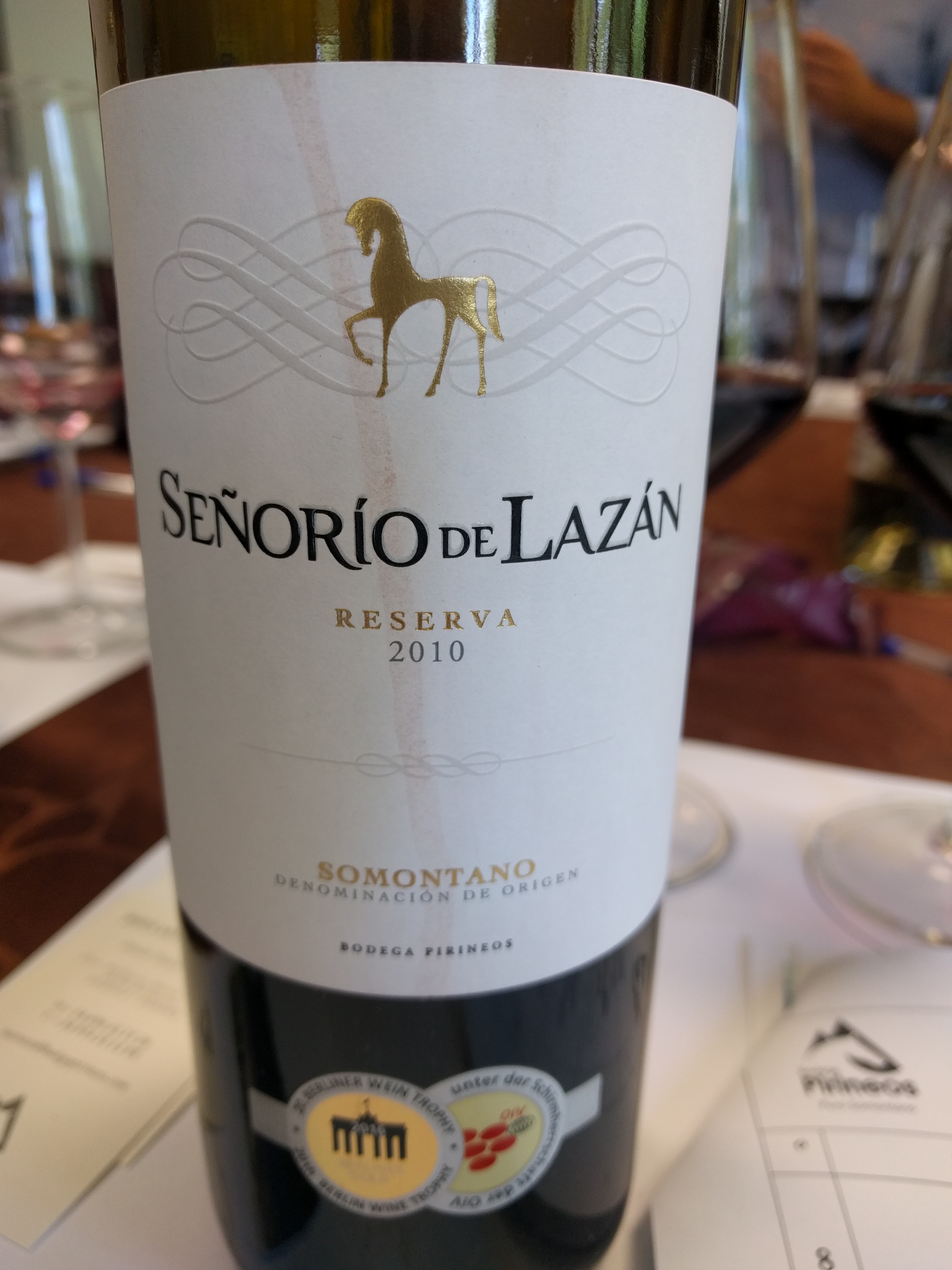
Bodega Pirieneos 2010 Señorio de Lazán Reserva
 Pirieneos evolved from a pioneering co-operative in the region, going private in the early 1990s, and now represents about twenty-five percent of the entire Somontano DO. Most of their vineyards are dry-farmed, with naturally low grape yields that are harvested at night to protect the grapes from the heat. The name of their Reserva is a tribute to the Lazán mountain in the Sierra de la Candelera, and the former marquis who was a lord of the area. This blend also pays tribute to the triple-threat identity of Somontano, using the international Cabernet Sauvignon, Spanish Tempranillo, and local Moristel. Their Reserva might also be the forerunner of oak-aged red wines in the region. It’s floral, peppery, and generous with blackcurrant fruit flavors and notes of tobacco and coffee.
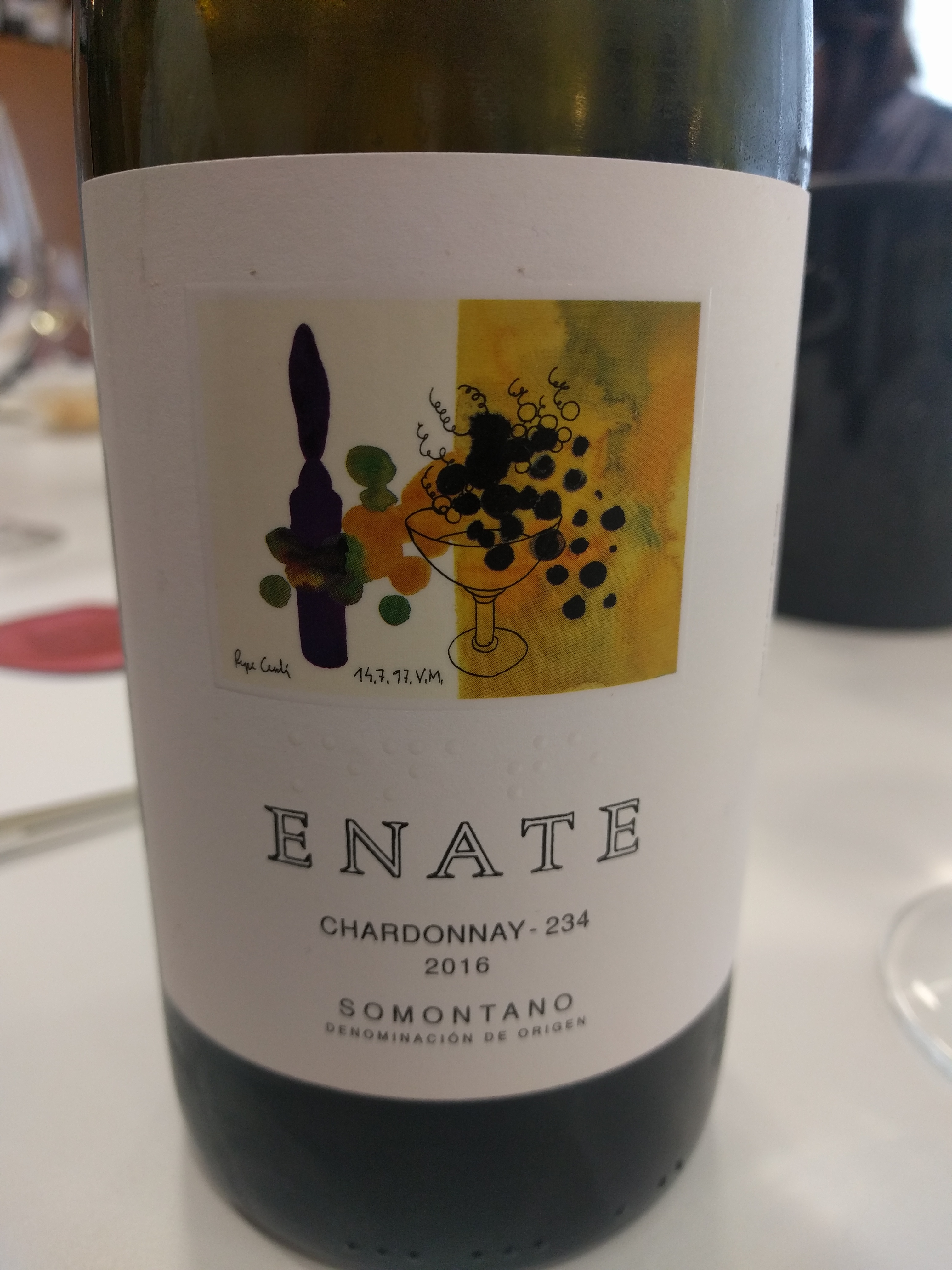
Enate 2016 Chardonnay-234
Enate, celebrating its twenty-fifth anniversary in 2017, is one of the founders of the Somontano DO, producing about 2.5 million bottles per year. The brand is probably most famous regionally for the artwork that it commissions for its labels, much of which then goes on display in its impressive museum. Its Chardonnay is lively and pretty, with aromas of white flowers, citrus, and peach, and flavors of apricots and pears. It’s pithy, persistent, and a versatile match with food.

Enate 2012 Cabernet-Cabernet
So good that they had to name it twice? Well, once could certainly make an argument for that. The idea of this wine is to blend two different styles of Cabernet Sauvignon – a leaner, serious European take and a riper, generous Mediterranean side. It works; the result is a modern, juicy, plummy red with power and structure, but also with good balance and intriguing notes of toast, dried herbs, spice, and cigar.
Batán de Salas DeBeroz 2016 Essencia de Gewürztraminer
Batán de Salas de Beroz is headed up by current Somontano DO president Mariano Beroz Bandrés. In contrast to the region’s other fine wine producers, who in many cases have either large, ultra-modern facilities or long, storied histories, Batán de Salas is small operator, housed unassumingly in an industrial area. They have steel tanks to one side, bottle storage to the other, and barrels and concrete in between. As Beroz puts it, “we make garage wine, in a bigger garage.” Their Gewürztraminer is a textural, focused, and serious effort that belies their small size. The white has intense rose petal notes, with ample stone fruits, apples, and citrus flavors.

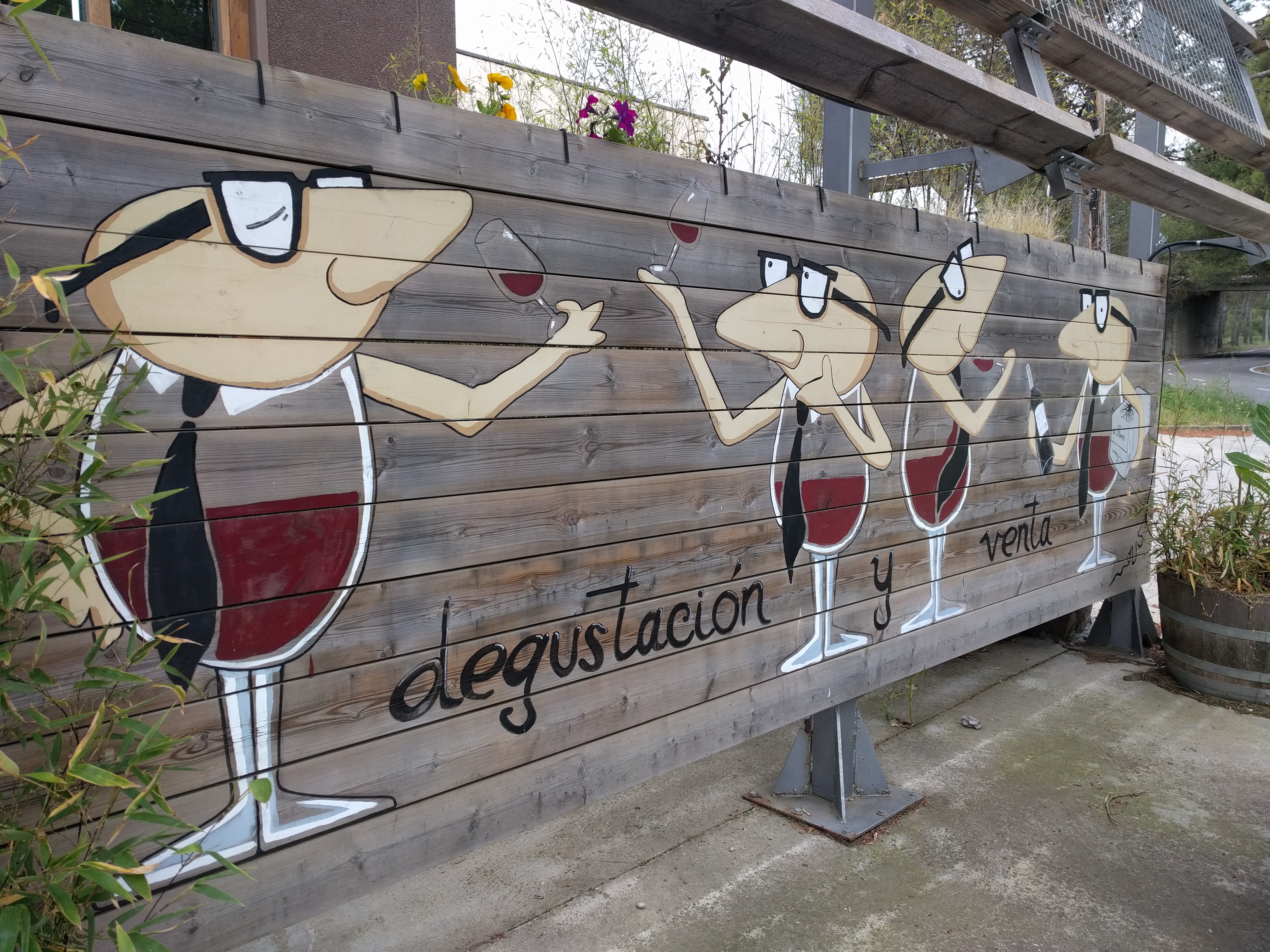
A sense of humor at Batán de Salas’ tasting room
Viñas del Vero 2014 La Miranda Secastilla Garnacha
Viñas del Vero, and its sister winery Blecua Estate, are high-end, boutique operations owned by the González Byass group, who operate over twenty wine brands worldwide. That corporate ownership seems to have little trickle-down impact on the Somontano wines overseen by the talented José Ferrer, who has a winemaking touch equally as impressive as the renovated Blecua Estate in which he works. The Secastilla red is produced primarily from old vine Garnacha planted in organic vineyards that are over 700 meters above sea level. The combination of unique site and attention to detail in the cellar results in a lovely, fleshy, refined, and complex wine. Notes of violets, black pepper, spices, and dried herbs combine with fresh blue, black, and red plum flavors, and enough structure to suggest that some cellaring patience will pay dividends later. [ Editor’s note: for more on this stellar producer, check out the feature that ran here earlier. ]

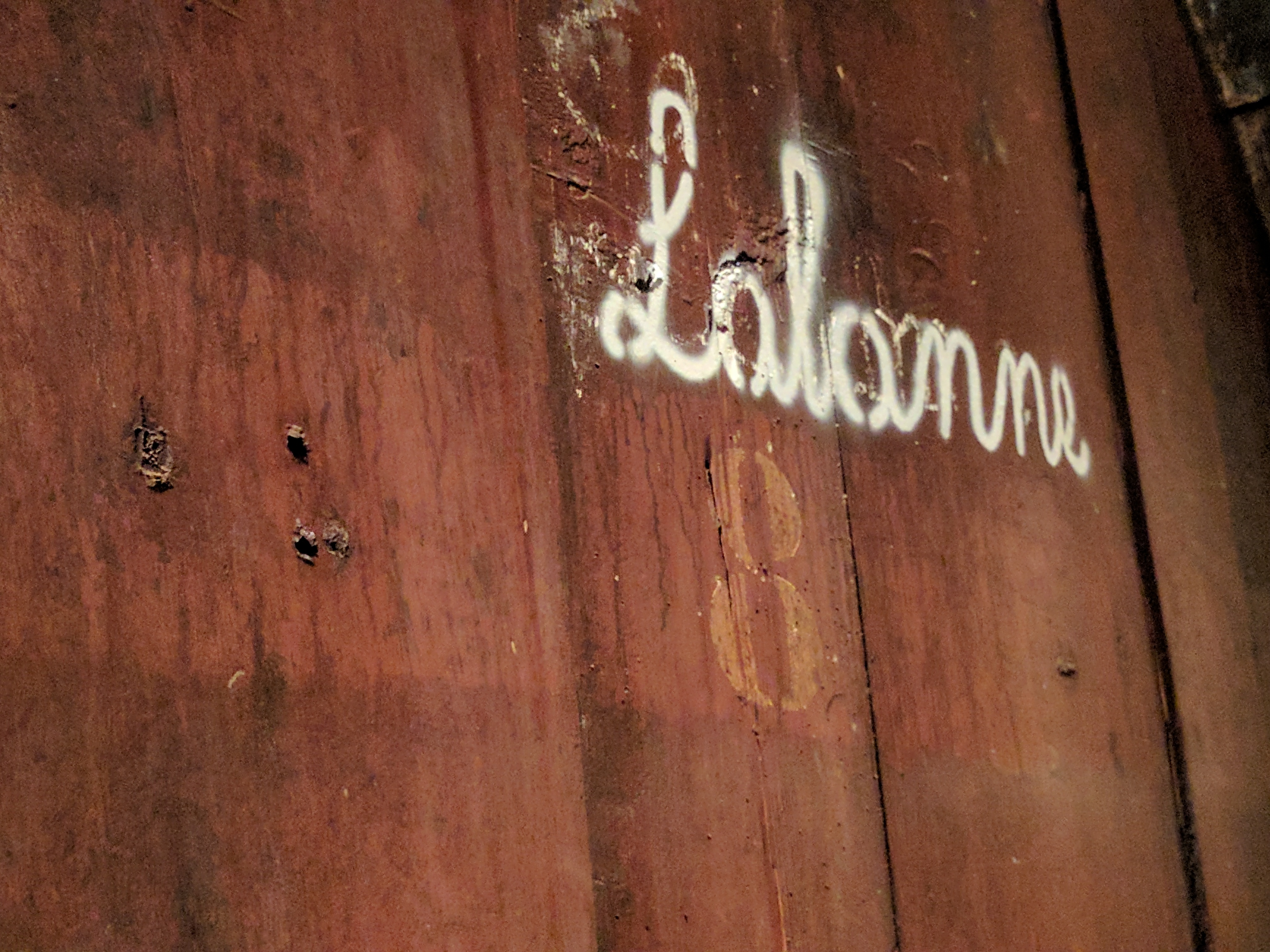
Bullet holes from the Spanish Civil War are still visible on some of Lalanne’s barrels.
Lalanne 2011 Lataste Gran Vino
The history of Lalanne parallels the history of modern Somontano wine, and their roots in the area run as deep as any of the region’s oldest vines. This family-run outfit was established by an offshoot of a Bordelais family that decided to move to the area during the phylloxera epidemic in the late 1890s. The family has run a local hotel, regional trains and boats (guess what those were used to transport…), and owned a hydroelectric plant that once provided the majority of Somontano’s electricity. Not surprisingly, Lalanne is one of the oldest commercial wineries in the region, and one of the founding DO members. Some of their large oak casks still bear bullet holes from the Spanish civil war. Their Lataste (named after their founder’s wife) is an interesting example of Somontano’s potential, blending all of the DO’s red international varieties – Cabernet Sauvignon, Merlot, Syrah, and Pinot Noir (with a bit of Tempranillo, as well). Each vineyard plot is selected, fermented, and aged separately before blending. It’s an “old school” dark and earthy red, with notes of chalk, leather, prunes, and licorice.
Sommos 2016 Glárima Variatales Blanco
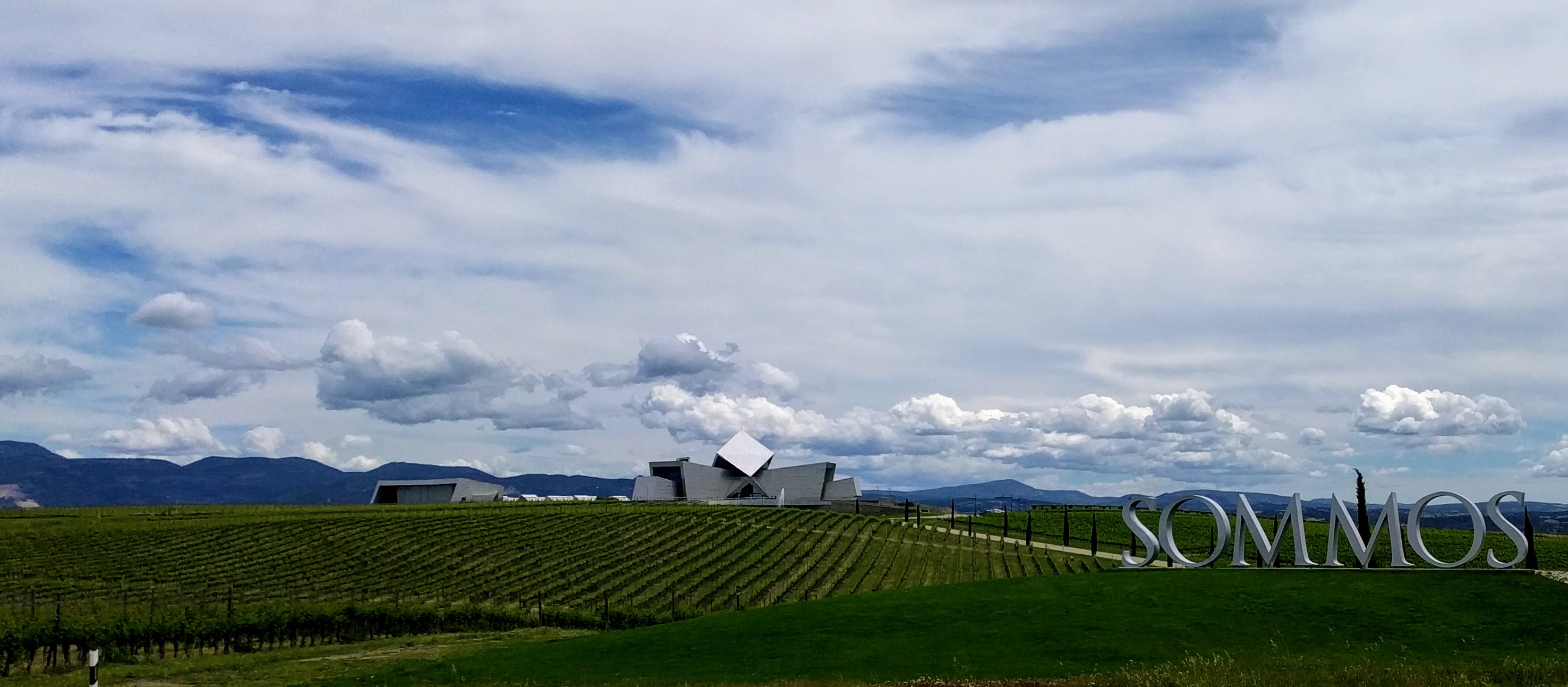
Sommos is an architectural wonder. Designed by Jesus Marino Pascual, the winery has twenty-seven meters above ground, and extends the same distance underground, as well. Its ultra-modern facade houses an antiseptically clean, mechanized, cavernous interior where just about every stage of the winemaking process is carried out by large, impressive machinery. Almost as impressive are the experimental vineyards surrounding Sommos, in which twenty different vine training systems are being used. The calling card of the winery is their Glárima white, a blend of Gewürztraminer, Chardonnay, and Pinot Noir. Aromas of hay, roses, and apples give way to pear and citrus flavors, with a texture that is both intellectual and delicious.

Sommos 2014 Merlot
If you like your Merlot on the dark and toasty side, then you’ll love this red. Dark and plummy, with ample tannic structure and full body, Sommos’ Merlot is a complex beast of a wine, with aromas of oak, vanilla, tobacco, and even smoked meat.
Laus 2016 Rosado
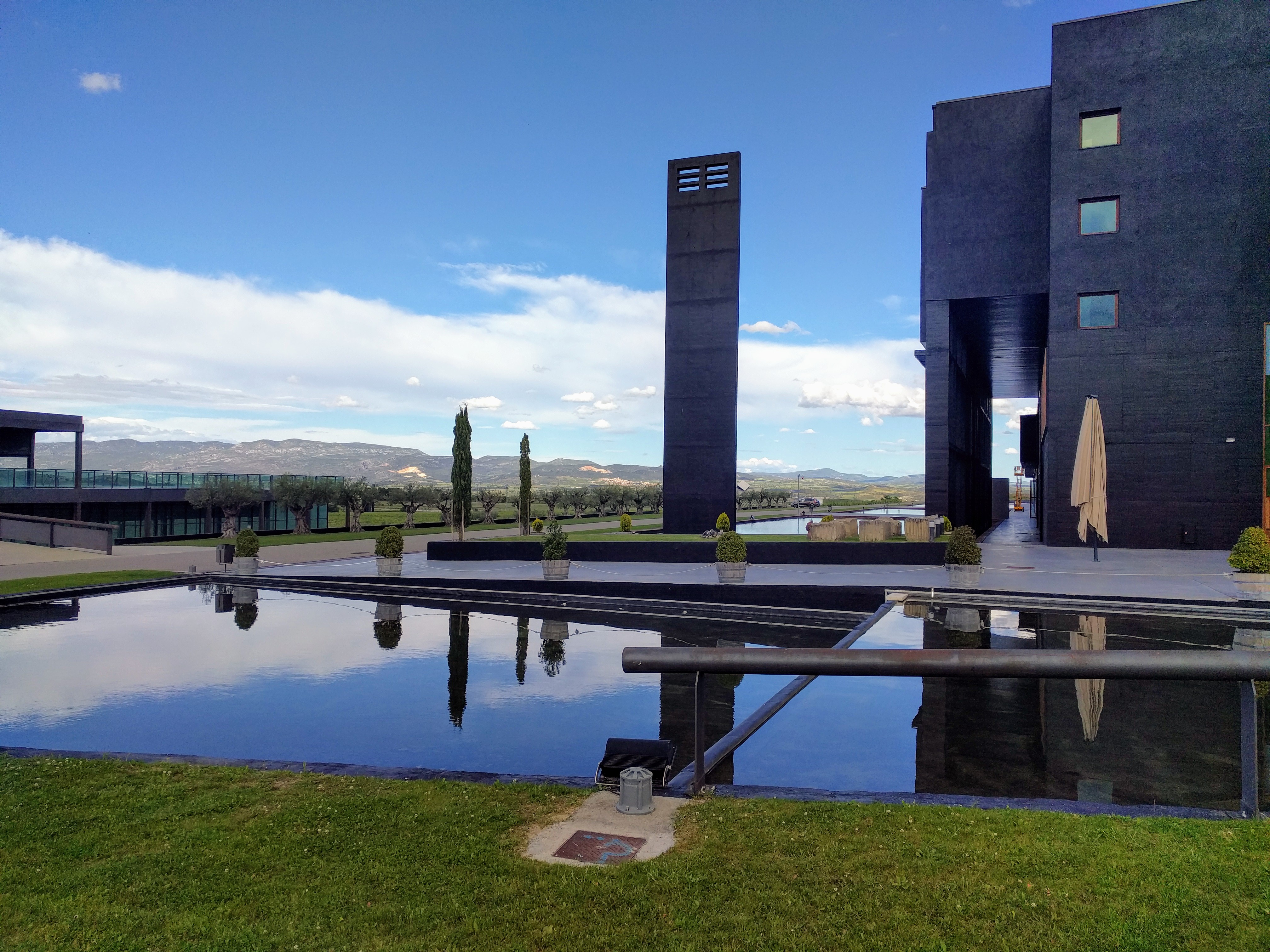
Across the street from Somos sits Laus, a winery in transition (with redesigned labels, and a restaurant and spa in development) whose clean, stylized exterior would look ultra-modern if not for its slightly ultra-modern neighbor. The name means “grace,” and certainly its combination of 100 hectares of well-tended vineyards and calming water pools (used to help cool the winery areas underneath) will have a calming effect on just about any visitor. Winemaker Jesús Mur has crafted an instantly accessible rosé from Laus’ Syrah and Garnacha. It has a beautiful watermelon color, with strawberry flavors and a tasty, vibrant mouthfeel.

Modern styling marks the construction at Laus
Laus 2013 Tinto Crianza
A 50/50 blend of Cabernet Sauvignon and Merlot, with eight months of French oak aging, this red is a testament to the Bordeaux heritage of Somontano’s modern wine scene. Pure flavors of cassis and plum mingle with clove, violet, toast, and cigar aromas in this focused and fresh wine. If its structure is any indication, Laus have an overachiever on their hands here that will mellow out and get even more delicious with a bit of bottle aging.
Cheers!
Copyright © 2016. Originally at
Northern Spain’s “Small California” (Spotlight On Somontano) from
1WineDude.com - for personal, non-commercial use only. Cheers!
source
http://www.1winedude.com/northern-spains-small-california-spotlight-on-somontano/




 2017 Cowhorn Spiral 36 White


