Monday, 17 September 2018

Wine Reviews: Weekly Mini Round-Up For September 17, 2018

I taste a bunch-o-wine (technical term for more than most people). So each week, I share some of my wine reviews (mostly from samples) and tasting notes in a “mini-review” format.

They are meant to be quirky, fun, and (mostly) easily-digestible reviews of (mostly) currently available wines (click here for the skinny on how to read them), and are presented links to help you find them, so that you can try them out for yourself. Cheers!


Grab The 1WineDude.com Tasting Guide and start getting more out of every glass of wine today!

Shop Wine Products at Amazon.com

Copyright © 2016. Originally at Wine Reviews: Weekly Mini Round-Up For September 17, 2018 from 1WineDude.com - for personal, non-commercial use only. Cheers!

source http://www.1winedude.com/wine-reviews-weekly-mini-round-up-for-september-17-2018/

Saturday, 15 September 2018

September Newsletter 2018

Wine Newsletter

50% OFF ALL CLASSES!

50% OFF BOGO SALE

For the rest of September, get a 50% off coupon for any class, up to $250 in value. Purchase any upcoming class or course, and the 50% off coupon code will be emailed to you immediately. This is the best sale we’ve ever put on in a long time, so I’d suggest jumping on it ASAP!

Their are only three caveats: the discount is valid for up purchases up to $250 in value, only one coupon per person, and the code is only valid for 7 days once it’s sent.

Are we insta-famous yet?

We aren’t all that great at social media, but a year ago a student (thank you, Sarah!) encouraged us to sign up for Instagram. People seem to love our feed –almost 7K followers at this point! We make a point of following all our students, too:  it’s a great way to keep in touch. Check us out here: https://www.instagram.com/phillywine/

Geek Alert: Swiss Wines

There are a few nice quotes about the Wine School in this month’s Condé Nast Traveler. It’s an article on Swiss wines, and it’s worth a read: https://www.cntraveler.com/story/the-swiss-wine-vacation-we-all-need-to-take

Suggested Classes

A few upcoming classes at the school that you should consider attending.


Natural Wine Class

The Natural Wines Class

Thursday, November 1st at 7:30 pm

Natural wines, organic wine, and bio-dynamic wines have been a controversial topic since the school was founded in 2001. It’s a topic we love, and our advocacy of natural wines has permeated every wine class we’ve taught for the last 20 years. Come learn more about the brave new world of winemaking. https://www.vinology.com/class/natural-wines/

east coast wines

First Growths of the East Coast

Thursday, November 15th at 7:30 pm

There are hundreds of wineries scattered from Virginia to Maine. Over the last few years, a quiet revolution has begun in their vineyards. Visionary winemakers are making exceptional wines and doing so without much fanfare. https://www.vinology.com/class/east-coast-wine/

world atlas of wine

World Atlas of Wine

November 16th at 7:30 pm

The World Atlas of Wine is an essential and authoritative wine class for beginners. Philadelphia’s increasing appetite for wine is matched by a growing thirst for knowledge; which this class will amply satisfy. Learn about the essential wine regions around the world in a single two-hour wine tasting class. https://www.vinology.com/class/world-atlas-wine/

food and wine pairing

Food & Wine Scholar™

Mondays, March 11th to May 9th from 7:30 to 9:30 pm

This wine course qualifies for the NWS Advanced Sommelier Certification Program. Demystify the challenge of food and beverage pairings. This wine course presents a practical, user-friendly approach grounded in understanding the direct relationships and reactions between food and wine components, flavors, and textures.    https://www.vinology.com/class/advanced-wine-course-food-wine-pairing/


Wine Reviews

All wines are available at the PA Wine & Spirits Stores. To find bottles near you, we suggest using our Wine Finder App: https://www.vinology.com/winefinder/


Mark Herold 2014 “Collide” Red, California

Mark Herold 2014 “Collide” Red, California

Despite drinking like a luxury Napa wine, this is something very different. Exactly where the grapes come from is unclear. It’s a blend of Tempranillo, Petite Sirah, Graciano, Carignan, Syrah and Alicante Bouschet, so probably much of the fruit comes from older vineyards in Sonoma and the Central Coast.

The style is pure fruit, with bursts of blackberry, cola, and sweet vanilla. The voluptuous richness is balanced with milk chocolate and hawthorn. I’d say this bottle under-represents it’s ABV on the label. I would be surprised if it wasn’t 16.1% alcohol.

Price: $16.99  | Wine Rating: 91 Points | Availability: Wine & Spirits Stores in PA


Matetic 2014 Corralillo Syrah

Matetic 2014 Corralillo Syrah

The Matetic is an organic-wine-on-steroids bottle of Syrah from a sub-region of Casablanca on the Chilean coast. Aromas of fresh fig and beef jerky kick off the party. Textually, this bottle is dynamic. A full bodied, layered tannins, with an edge of sauvage. Smoked flavors roll into blackberry and a mineral-laced finish. An incredible value.

Price: $14.99  | Wine Rating: 91 Points | Availability: Wine & Spirits Stores in PA


Isabella 2016 Bobal, Ribera del Jucar

Isabella 2016 Bobal, Ribera del Jucar

Bobal has always been used locally as a blending grape, but over the past decade it’s becoming more common to offer it as a single-varietal wine. This particular bottle is a great introduction to the grape. The price can’t be beat, and it’s super gulp-able. Soft tannins and medium bodied, this is a gulp-able wine with plenty of vanilla-spice and big red fruit. It’s a crowd-pleaser, to be sure.

Price: $7.99  | Wine Rating: 89 Points | Availability: Wine & Spirits Stores in PA

Carden Cabernet Sauvignon Columbia Valley 2013

Carden  2013 Cabernet Sauvignon Columbia Valley

This winery may be on it’s last vintage, but I’m just glad to have access to this monster Cabernet. Like some other Columbia Valley Cabernet we’ve reviewed recently, this is made by an Oregon winemaker: this time by the brilliant Tony Rynders, formerly of Domaine Serene.

Masterful in execution, has a beauty that is rare in such powerful wines. Layered aromas of licorice, cigar box, and smoked tea. The lush palate is buttressed with dense tannins and enough acidity to keep the whole affair intact. The reference here is clearly Chateau Margaux.

Price: $24.99  | Wine Rating: 94 Points | Availability: Wine & Spirits Stores in PA


North by Northwest 2014 Cabernet Sauvignon, Columbia Valley

North by Northwest 2014 Cabernet Sauvignon, Columbia Valley

North by Northwest is the Columbia Valley brand owned by King Estate, best known for it’s Oregon Pinot Noirs. The brand has been kicking around since 2005, but it’s making inroads into the East Coast only recently. Like many Columbia Cabernet, it’s got amazing fruit in the bottle and equally attractive price on the label.

This wine sports an attractive bouquet of cocoa, graphite, and toasted apple wood. The palate is deeply extracted with dense boysenberry notes followed by Asian five spice and a finish that turns up the sweet vanilla and plum notes. Under $20, this is a steal.

Price: $15.99  | Wine Rating: 90 Points | Availability: Wine & Spirits Stores in PA


Shannon Ridge “Vigilance” 2017 Sauvignon Blanc, Red Hills

Shannon Ridge “Vigilance” 2017 Sauvignon Blanc, Red Hills

Shannon Ridge is becoming a favorite in Pennsylvania. It’s wines have showed up in so many Chairman Selection offerings, that it’s becoming a annual tradition to review a bottle or two of their wines. This bottling is quite a pleasant surprise, exceeding their very good 2016 Sauvignon Blanc.

This bottle is exactly what an SB drinker wants. Bright fresh grapefruit flavors, a touch of exotic citrus, and a touch of snipped chive and strawberry leaf on the nose.

Price: $10.99  | Wine Rating:88 Points | Availability: Wine & Spirits Stores in PA


Andre Delorme Blanc de Blancs Brut Reserve, Burgundy

Andre Delorme Blanc de Blancs Brut Reserve, Burgundy

A $10 bottle of bubbles that drinks like a decent bottle of Champagne? Say it isn’t so! This bottle of bubbles is crafted in a modern Moët & Chandon style. This is the bottle I’ll be drinking on Sunday afternoon, possibly with Oysters Rockefeller.

Made in Burgundy, this Blanc de Blanc is a blend of Chardonnay and Aligote. Fresh flavors of ripe peaches and hazelnuts, the pin-point bubbles bring a fine mousse and an pretty honeysuckle aroma to the the experience.

Price: $9.99  | Wine Rating: 89 Points | Availability: Wine & Spirits Stores in PA


Wine School of Philadelphia
109 S. 22nd Street
Philadelphia, PA 19103
www.vinology.com


The post September Newsletter 2018 appeared first on Wine School of Philadelphia.


source https://www.vinology.com/september-newsletter-2018/

Thursday, 13 September 2018

Mark Herold 2014 “Collide” Red, California

Mark Herold 2014 “Collide” Red, California

Mark Herold 2014 “Collide” Red, California


Mark’s new tasting room just opened in Napa –just down from the Oxbow Public Market– a scant three months before I reviewed his wines. I loved the room –super fun and modern– but another journalist gently pointed out that it was geared towards Millennial wine drinkers, not us old cranks. Thanks, man. Thanks.

That begs the question: what the *#&#E is a millennial wine? Is “Collide” the harbinger of Millennial vino? A  new paradigm? Cool decor aside, I’m not convinced. Mark Herold’s wines are delicious in that Napa-esque way Gen-Xers have been slurping up for years. He earned his stripes at the Joseph Phelps winery, he ran a custom crush facility for a while, then went on to become the  winemaker for Sonoma’s Kamen Estate.

The real difference with Collide is that, despite being sold in Napa and tasting very much like a luxury Napa wine, it doesn’t have any Napa fruit, nor is it actually made in Napa, either. Exactly where the grapes come from is unclear. It’s a blend of Tempranillo, Petite Sirah, Graciano, Carignan, Syrah and Alicante Bouschet, so probably much of the fruit comes from older vineyards in Sonoma and the Central Coast.

The style is pure fruit, with bursts of blackberry, cola, and sweet vanilla. The voluptuous richness is balanced with milk chocolate and hawthorn. I’d say this bottle under-represents it’s ABV on the label. I would be surprised if it wasn’t 16.1% alcohol.


The post Mark Herold 2014 “Collide” Red, California appeared first on Wine School of Philadelphia.


source https://www.vinology.com/mark-herold-2014-collide-red-california/

The Good Sh*t (Biodynamic Preparations At Troon Vineyard)

Troon vineyard 1

Rudolf Steiner (1861-1925), who founded the farming practices now known under the certification of Biodynamics, was largely full of sh*t.

For example, Steiner was all about making wild claims based on anonymous sources long before it became the new standard of presidential tweeting in the U.S.; just check out a handful of the claims he made in his The Submerged Continents of Atlantis and Lemuria:

“As to the sources of the information to be given here, I am for the present obliged to be silent. He who knows anything at all about such sources will understand why this must be so…”

“…it was only in the course of time that the forms of man and woman arose from an earlier, original form in which the human being was neither the one nor the other, but both at the same time.”

Troon biod 1

Working the good sh*t at Troon in Oregon

“Just as we have contrivances for transforming the latent force of coal into the power to propel our engines, so had the Atlanteans devices for heating by the use of plant-seeds in which the life-force was changed into a power applicable to technical purposes. In this way were propelled the air-ships of the Atlanteans, which soared a little above the earth. These air-ships sailed at a height rather below that of the mountains of Atlantean times, and they had steering appliances, by means of which they could be raised above these mountains.” 

So we’ve got, with literally no evidence, Steiner on the record challenging how humans evolved, and claiming that ancient Atlanteans had airplanes powered by seed oil. So if you’re not at least a little bit skeptical of the guy’s take on farming, then you have deep issues with how you handle facts, logic, and the scientific method.

This doesn’t mean, of course, that with Biodynamics he didn’t stumble upon something incredibly useful for coalescing several centuries-old, tried-and-true farming practices that turned out to be great for fine wine vineyards. But it does mean that we need to approach anything that Steiner wrote with healthy (and probably substantial) levels of skepticism. We’ve tackled this topic before on these virtual pages, giving equal “air time” to both prominent Pro and Con voices regarding BioD, and more or less ended up not that much farther from our starting point (or, at least, I didn’t).

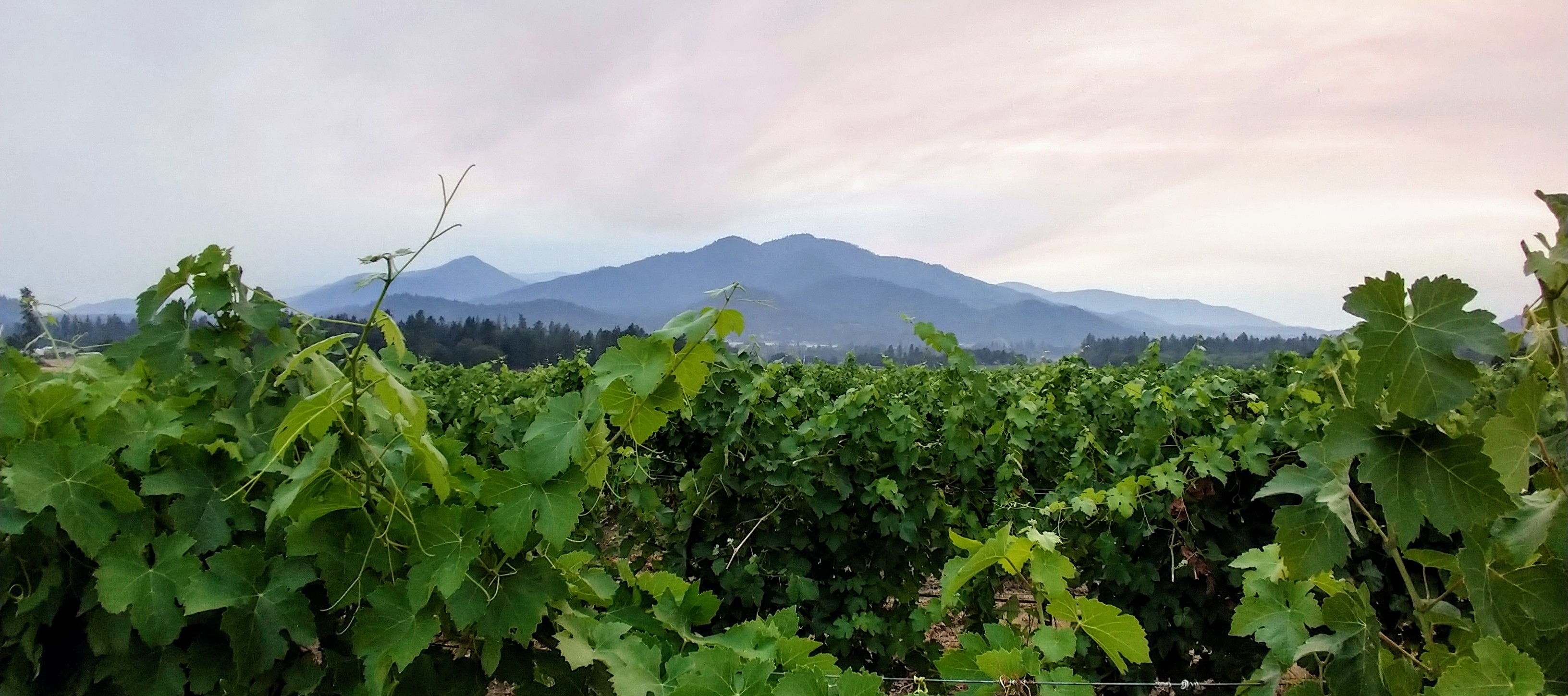
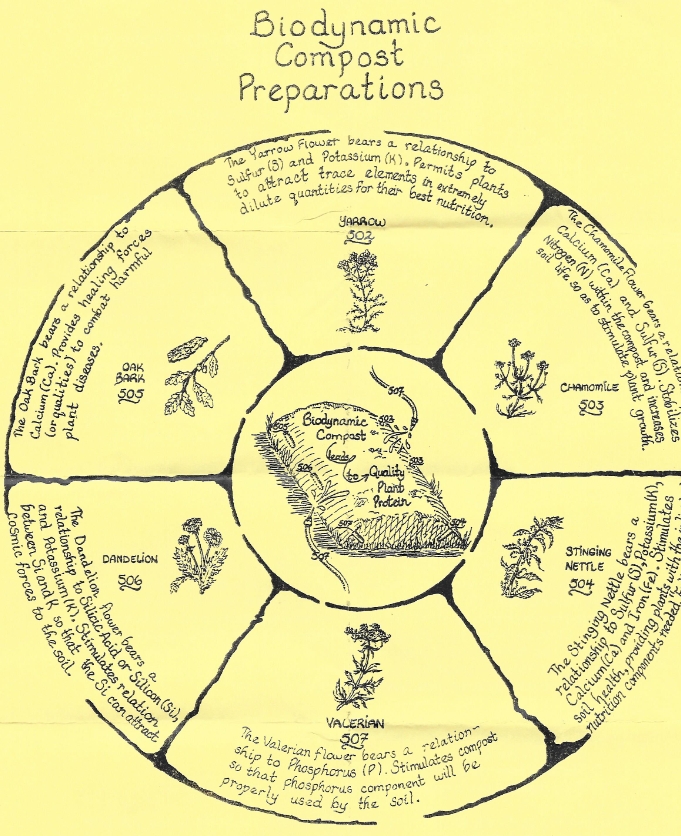
And so it was with a sort of mixed fascination and trepidation that I recently observed firsthand Troon Vineyard‘s Biodynamic compost preparations (#502-507) in the gorgeous (but, at the time, quite smokey) Applegate Valley, to literally see “the good sh*t”…

Troon BioD 2

I was in town at the time to take part in the 2018 Oregon Wine Experience wine competition, and took up an invitation to visit from my friend and Troon GM Craig Camp. 2018 will be Troon’s first 100% certified Biodynamic vintage, and the thinking behind it has nothing to do with smoking the other “good sh*t” big agricultural crop (marijuana) in Troon’s neck of the woods; the plan is that Biodynamic farming can help the resiliency of the vines, and therefore allow for more dry-farming, less water usage, and increasingly better and better vineyard fruit. Combined with six full-time vineyard staff, “you get a different level of care in the vineyard” according to Camp.

Troon biod 2

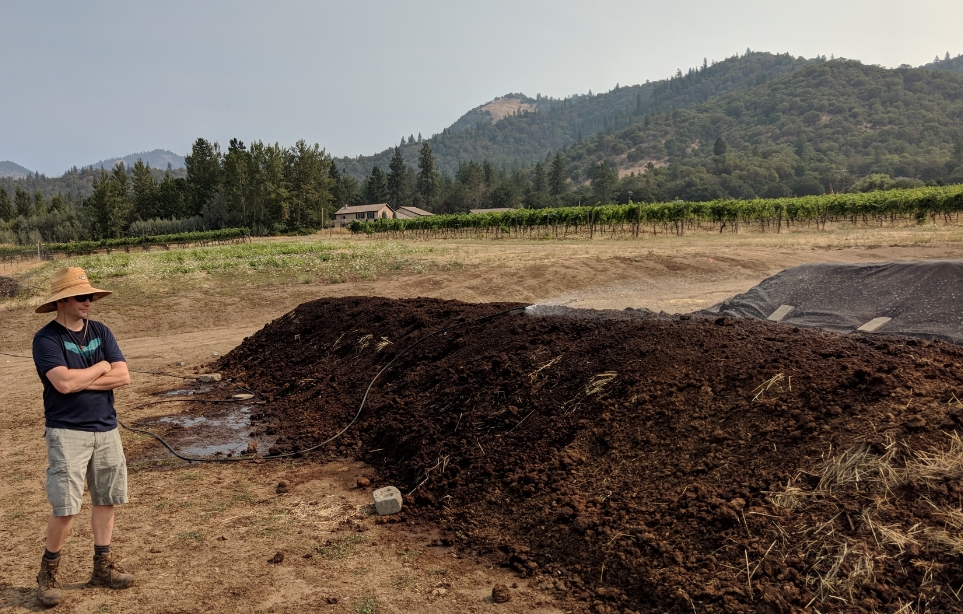
Troon’s assistant winemaker Nate Wall surveys the day’s Biodynamic prep efforts

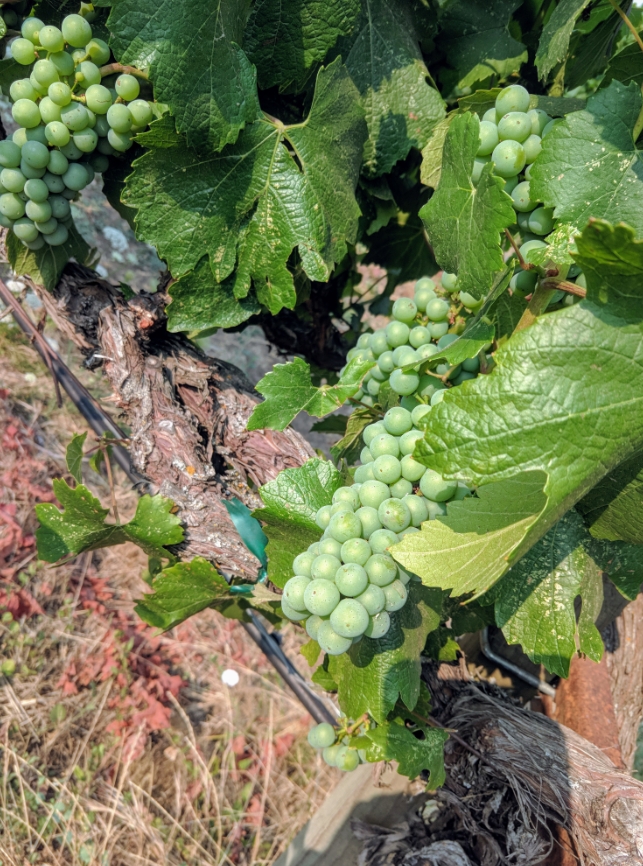
Thankfully, Troon’s application of Biodynamics isn’t moon-phase-chasing, ganjas-smokin’ BS; they are measuring the impact both in terms of soil impacts, vine health, and resulting wine quality. Over seventy soil pits have been dug and analyzed on the property – along with genetic sequencing of the microorganisms contained therin – to get a microbiome baseline. Early results are promising (more on the liquid results of all of that work to come in later articles here), and I got to measure some of the vine health myself by tagging along with assistant winemaker Nate Wall to perform leaf pressure-bomb analysis (the TLDR summary of that excursion: things are looking very good).

Troon vineyard 2

Anyway, back to the literal good sh*t…

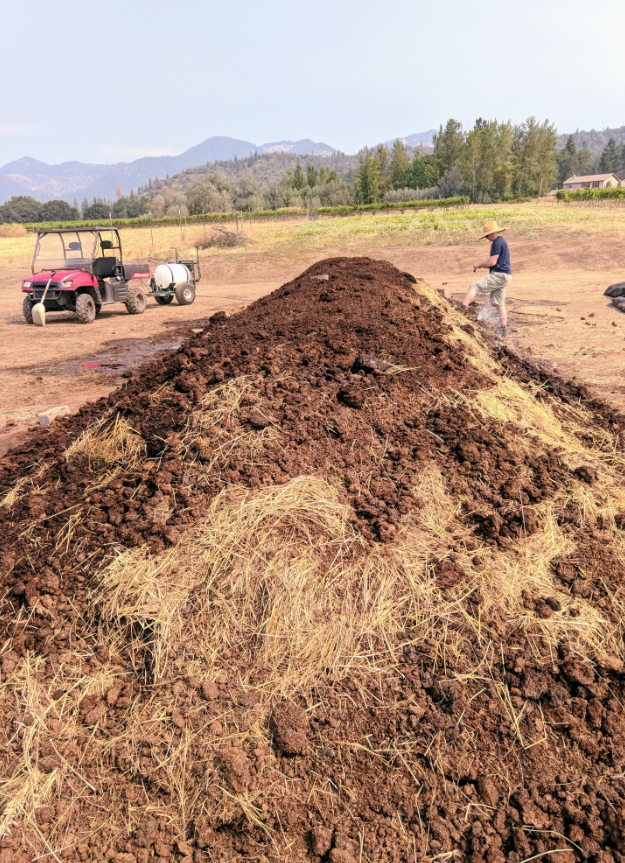
During my visit, Troon was working over (e.g., turning, moistening, and adding BioD preparations such as dandelion, Valerian, yarrow, chamomile, and nettle) some of the most appealing compost I’ve ever seen. While there are way too many references to things like “cosmic forces” in the BioD prep. directions, there’s also some scientific method to the madness of adding in these elements to make for effective compost. For example, oak bark (#505) is probably acting as an antiseptic; Valerian might stimulate phosphorus and earthworm activity (the latter being essential for composting); yarrow might interact with potassium and sulfur to aid in plant nutrient intake.

BioD compost prep

What really blew me away about the results of the compost was how incredible it smelled; or, I should say, didn’t smell. It was aromatic (think woodsy and slightly sweet), not stinky. Parts of it felt almost like potting soil. It just about screamed (in so much as earth can scream) healthy.

I mean, this was seriously, seriously good sh*t. I immediately wanted to steal some and throw it all over my yard, which I suppose is one of the higher compliments one can pay to an enormous pile of compost.

Cheers!

Grab The 1WineDude.com Tasting Guide and start getting more out of every glass of wine today!

Shop Wine Products at Amazon.com

Copyright © 2016. Originally at The Good Sh*t (Biodynamic Preparations At Troon Vineyard) from 1WineDude.com - for personal, non-commercial use only. Cheers!

source http://www.1winedude.com/the-good-sht-biodynamic-preparations-at-troon-vineyard/

Monday, 10 September 2018

Wine Reviews: Weekly Mini Round-Up For September 10, 2018

I taste a bunch-o-wine (technical term for more than most people). So each week, I share some of my wine reviews (mostly from samples) and tasting notes in a “mini-review” format.

They are meant to be quirky, fun, and (mostly) easily-digestible reviews of (mostly) currently available wines (click here for the skinny on how to read them), and are presented links to help you find them, so that you can try them out for yourself. Cheers!


Grab The 1WineDude.com Tasting Guide and start getting more out of every glass of wine today!

Shop Wine Products at Amazon.com

Copyright © 2016. Originally at Wine Reviews: Weekly Mini Round-Up For September 10, 2018 from 1WineDude.com - for personal, non-commercial use only. Cheers!

source http://www.1winedude.com/wine-reviews-weekly-mini-round-up-for-september-10-2018/

Wednesday, 5 September 2018

Fumbling The Ball At Goal-line (Thoughts On The 2018 Lancet Alcohol Study)

Recently, an examination of a rather large data set of studies (we’re talking nearly 200 countries, and over 690 pieces of work involving millions of people) was published in Lancet, and most of my alcohol-loving friends just about lost their sh*t.

The reason for the theoretical emergency bowel-vacating stemmed from media coverage of one of the Lancet study’s late conclusions, and the one harpooned by the media and shared pretty much everywhere (emphasis mine):

“Alcohol use is a leading risk factor for disease burden worldwide, accounting for nearly 10% of global deaths among populations aged 15–49 years, and poses dire ramifications for future population health in the absence of policy action today. The widely held view of the health benefits of alcohol needs revising, particularly as improved methods and analyses continue to show how much alcohol use contributes to global death and disability. Our results show that the safest level of drinking is none.”

That pithy little emphasized sentence above is the scientific equivalent of constructing a late-game, come-from-behind, potentially-game-winning NFL drive that started on your team’s own ten-yard line, culminating in a 3rd-and-long breakout run during which your guys fumble the f*cking ball at the goal-line and emerge with a heartbreaking loss. This is because there is a wealth of health-related insight that could come out of the Lancet study, and they chose to focus on the one aspect that the data don’t actually support directly; that conclusion is controversial at best, and is only loosely inferred from the analysis, based on the facts and results cited in the very study itself.

Bear in mind that alcohol constitutes an inordinate amount of the professional and leisure portions of my existence on this planet, which is why instead of trying to make that case myself in my own (not-so-)potentially biased way, I’ll instead refer you to Vox, who have already (splendidly) done that for me

Vox’s Julia Belluz has executed a well-researched and thoughtfully-entertaining takedown of the recent Lancet study, and it’s well worth a read, especially if you’re among the paints-soiling numbers who kind of freaked out about not being able to drink ever again.

This quote in particular from the Vox article needs a spotlight, as it brings a statistical numbers focus to the results and effectively acts as the article’s TLDR summary:

“…statistician David Spiegelhalter estimated that 25,000 people would need to drink 400,000 bottles of gin to experience one extra health problem compared to non-drinkers, ‘which indicates a rather low level of harm in these occasional drinkers.’

…the difference in health risk between those who drink nothing and those who have one daily drink is tiny — and, given the weak observational research it’s based on, potentially not meaningful.”

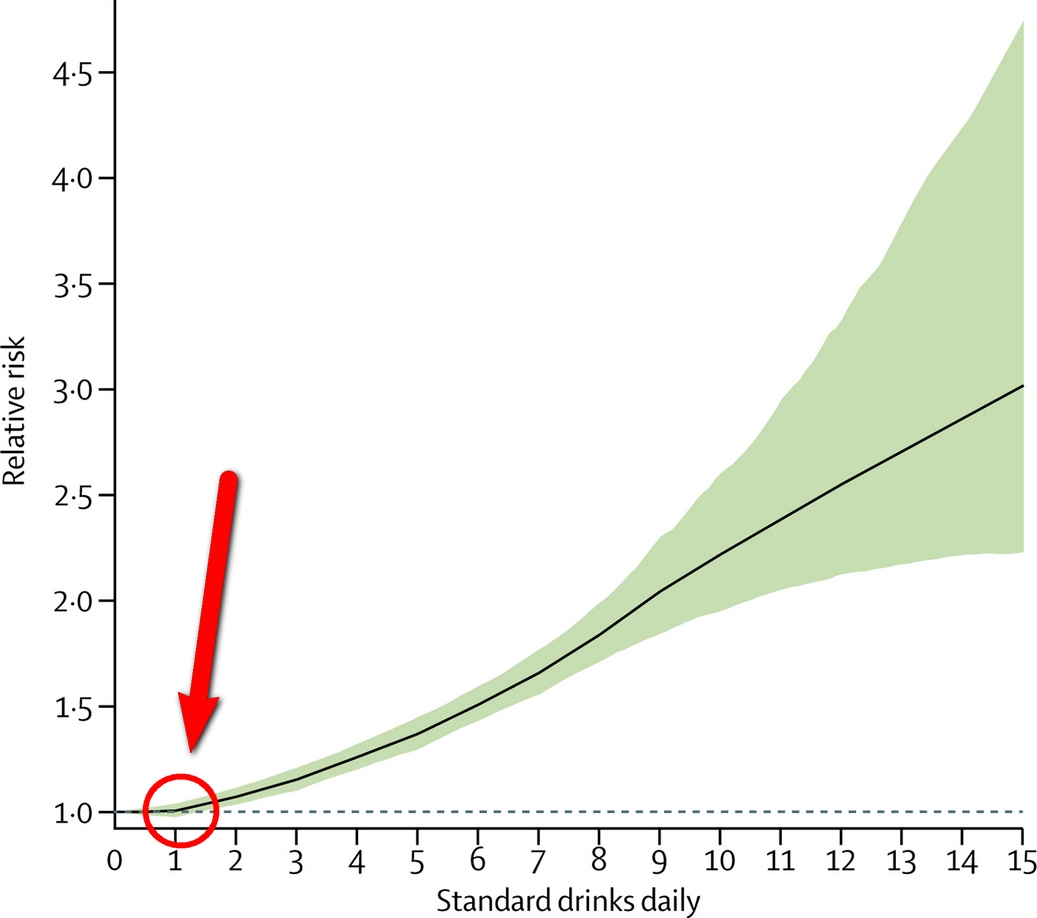
My slightly longer, but still abbreviated take involves this little summary results graph from the Lancet study (again, emphasis is mine):

Lancet study graph 2018

Jump to conclusions, much? (image: TheLancet.com)

As you can see above, the difference in cumulative relative health risks between having zero drinks and having one drink daily is reeeeeaaaalllly small. In fact, statistically it could be argued that the difference is within error margins; in other words, it’s almost zero.

Are you technically safer having no alcohol? Based on the Lancet study, yes, technically you are. Just like you’re technically safer not having any sun exposure whatsoever, never crossing the street, never driving a car, never taking a plane flight, never doing weed…

But if you want to play the statistical numbers, all things being equal health-wise you’re no worse off drinking in moderation than you are not drinking at all. And that conclusion is more-or-less just as valid based on the findings of the Lancet study as their conclusion that you should never drink if you want to reduce your overall health risk.

What this study does do a great job of underscoring, in my not-so-humble opinion, is the relative health danger of regular, immoderate/excessive drinking, which is undeniably a major worldwide issue right now and a substantial burden on our global economy and mental, social, and physical well-being. But focusing on moderate, responsible drinking as a problem – based on these data – is a bit like saying that we need to be careful about our water intake because too much of it can kill you…

Cheers!

Grab The 1WineDude.com Tasting Guide and start getting more out of every glass of wine today!

Shop Wine Products at Amazon.com

Copyright © 2016. Originally at Fumbling The Ball At Goal-line (Thoughts On The 2018 Lancet Alcohol Study) from 1WineDude.com - for personal, non-commercial use only. Cheers!

source http://www.1winedude.com/fumbling-the-ball-at-goal-line-thoughts-on-the-2018-lancet-alcohol-study/

Monday, 3 September 2018

Wine Reviews: Weekly Mini Round-Up For September 3, 2018

I taste a bunch-o-wine (technical term for more than most people). So each week, I share some of my wine reviews (mostly from samples) and tasting notes in a “mini-review” format.

They are meant to be quirky, fun, and (mostly) easily-digestible reviews of (mostly) currently available wines (click here for the skinny on how to read them), and are presented links to help you find them, so that you can try them out for yourself. Cheers!


Grab The 1WineDude.com Tasting Guide and start getting more out of every glass of wine today!

Shop Wine Products at Amazon.com

Copyright © 2016. Originally at Wine Reviews: Weekly Mini Round-Up For September 3, 2018 from 1WineDude.com - for personal, non-commercial use only. Cheers!

source http://www.1winedude.com/wine-reviews-weekly-mini-round-up-for-september-3-2018/